 Skip to content
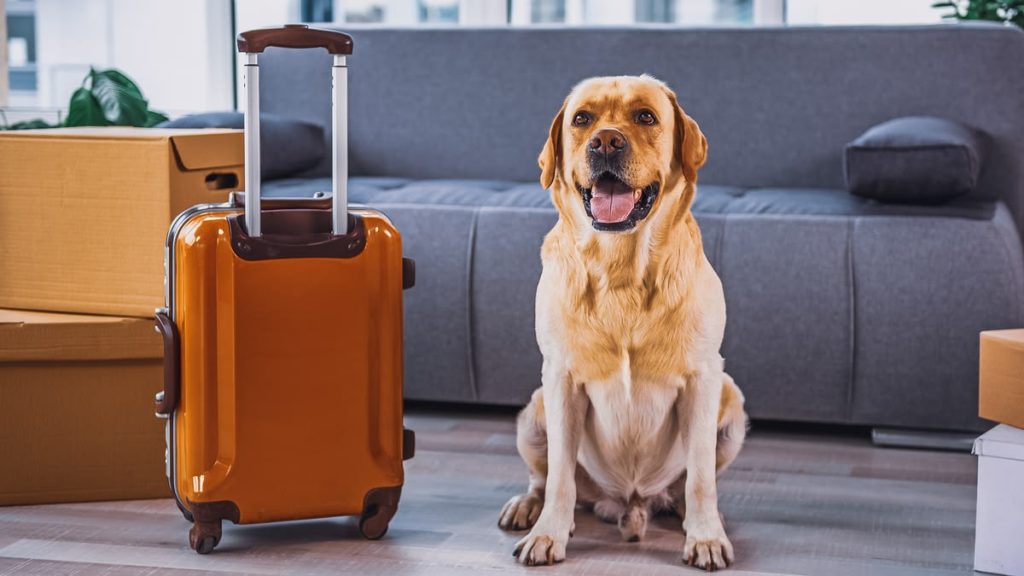
Relocating your large dog to Europe is a significant undertaking that requires careful planning, proper documentation, and an understanding of international pet transport regulations. Whether you're moving a German Shepherd to Germany, a Labrador to the United Kingdom, or a Great Dane to France, this comprehensive guide will walk you through everything you need to know about shipping large dogs internationally.
When it comes to international pet transport, airlines and countries categorize dogs differently based on their size and weight. Large dog breeds typically weigh between 50 to 100 pounds, while giant breeds exceed 100 pounds. This distinction matters because it affects everything from crate requirements to airline acceptance policies.
Popular large breeds frequently transported to Europe include:
Many pet owners don’t realize that airlines have specific weight limits and breed restrictions that vary by carrier. At Pet Transport Pro, we’ve successfully transported thousands of large dogs across the Atlantic, and we know exactly which airlines accommodate specific breeds and how to navigate these requirements smoothly.
Europe maintains strict but standardized pet import regulations across most EU countries. Understanding these requirements well in advance is essential for a smooth relocation process.
All dogs entering European Union countries must have proper health documentation. This includes a recent veterinary health certificate issued within 10 days of travel, showing your dog is fit to fly. Your veterinarian will examine your large dog thoroughly, checking for any health conditions that might complicate travel.
Your dog must be microchipped with an ISO compliant 15-digit pet microchip before receiving rabies vaccination. This is non-negotiable for all European destinations. The microchip should be implanted before any required vaccinations to ensure proper tracking and identification.
Dogs must be vaccinated against rabies at least 21 days before travel but not more than 12 months prior (some countries accept vaccinations up to 3 years if documented properly). For large dogs, ensuring rabies vaccination is current is particularly important because any delays can postpone your entire relocation timeline.
While EU regulations are largely harmonized, individual countries may have additional requirements:
Not all airlines are created equal when it comes to transporting large dogs. Some carriers have better track records, more spacious cargo holds, and staff trained specifically in animal handling.
The following airlines commonly accept large dogs in cargo for European destinations:
What many pet owners don’t know is that some airlines won’t accept brachycephalic (flat-faced) breeds or have seasonal temperature embargoes that affect large dogs. Working with experienced pet transport professionals means you’re booking flights during optimal conditions and choosing airlines with the best safety records.
As a professional agency, we utilize manifest cargo services with major carriers. This means your large dog is held in climate-controlled facilities and transported to the aircraft in specialized, temperature-regulated vehicles. Because we have access to these specialty flight options that are unavailable to the general public, we can safely transport large and thick-coated breeds, like Bernese Mountain Dogs or Saint Bernards, even during the warmer summer months.
The travel crate is your dog’s home during the journey, so getting it right is absolutely essential. For large dogs, crates must meet International Air Transport Association (IATA) standards and provide adequate space for your pet to stand, turn around, and lie down comfortably.
Your large dog’s crate must include:
To determine the correct crate size, measure your dog while standing:
For a 90-pound German Shepherd, you’re typically looking at a 700 series crate (approximately Length 48″ x Width 32″ x Height 35″). Giant breeds like Great Danes often require custom or specialty crates. Never undersize the crate to save on costs – your dog’s compliance with airlines rules, comfort and safety depend on selecting the proper kennel.
Start crate training at least 4-6 weeks before your departure date. Large dogs need time to adjust to confined spaces, especially if they’re not used to crates. Make the crate a positive space by feeding meals inside, placing favorite toys inside, and gradually increasing the time your dog spends in it with the door closed.
The investment in professional pet transport varies based on several factors, but understanding the cost breakdown helps you budget appropriately for your dog’s relocation.
When you work with Pet Transport Pro, your investment includes:
Many people initially consider handling the process themselves to save money, but they quickly discover the complexity involved. Missing a single requirement can result in denied boarding, quarantine, or having to rebook flights at significantly higher costs. Professional pet transport isn’t an expense – it’s an investment in your dog’s safety and your peace of mind.
We’ve successfully transported large dogs to every corner of Europe. Here’s what you need to know about the most common destinations:
London-Heathrow remains one of the busiest entry points for pets entering the UK. Post-Brexit, the UK maintains its own pet travel scheme, though requirements remain similar to EU standards. The UK requires tapeworm treatment for dogs entering from certain countries, administered 1-5 days before arrival. We’ve built strong relationships with animal reception centers at Heathrow, making the process seamless for your large dog.
Frankfurt and Munich are major entry points for pet relocation to Germany. While Germany follows EU pet travel regulations, some states (Bundesländer) have breed-specific legislation affecting certain large breeds. German Shepherds, Rottweilers, and similar breeds may face restrictions in states like Bavaria and North Rhine-Westphalia. We help you understand which regulations apply to your specific destination within Germany.
Paris-Charles de Gaulle is the primary gateway for pet entry into France. France categorizes certain large breeds as “dangerous dogs” (Category 1 and 2), which affects where they can live and how they must be managed in public. However, most family-friendly large breeds like Labradors and Golden Retrievers face no special restrictions. France’s central location makes it an excellent hub for onward ground transport to neighboring countries.
Amsterdam Schiphol Airport is known for excellent animal handling facilities. The Netherlands follows standard EU regulations and is generally very pet-friendly. However, they maintain a list of breeds requiring additional attention, including some large guarding breeds. Registration with local municipalities is required upon arrival.
Madrid and Barcelona are popular entry points for Spain. Spanish regulations vary by autonomous community, with some regions having stricter rules for large breeds. Spain’s warm climate means careful attention to travel timing – we avoid summer months for large, thick-coated breeds. The country is increasingly pet-friendly, with many cities welcoming well-behaved large dogs in public spaces.
Rome and Milan see significant pet traffic. Italy requires liability insurance for certain breeds deemed potentially dangerous. The good news is that Italy is generally accommodating to large dogs, and many Italian residents have large breeds themselves. Street life in Italian cities is dog-friendly, making adjustment easier for your relocated pet.
In the weeks leading up to your departure, it is a good idea to aquire the travel kennel to get your large dog accustomed to their new kennel.
Schedule a comprehensive health examination 2-3 weeks before travel. For large dogs, pay special attention to:
Never sedate your dog for air travel unless explicitly recommended by your veterinarian in consultation with our transport team. Sedation can be dangerous at high altitudes and interfere with your dog’s ability to regulate body temperature.
In the 48 hours before travel:
Include familiar items in the crate:
Understanding the travel day process helps reduce anxiety for both you and your dog.
When you choose Pet Transport Pro’s door-to-door service, our trained handler arrives at your home at the scheduled time. We conduct a final check of your dog’s health, review all documentation, and ensure the crate is properly prepared. For large dogs, we take extra time to help them settle comfortably before transport to the airport.
Large dogs travel as cargo on international flights. Our handler manages all airport procedures:
We provide real-time updates so you know exactly where your dog is throughout the process. You’ll receive confirmation when your dog is loaded, when the flight departs, and when it arrives at the destination.
Your large dog travels in a pressurized, temperature-controlled cargo hold. These areas maintain conditions similar to the passenger cabin. Most flights from the United States to Europe take 7-10 hours, depending on the route.
Your dog’s arrival in Europe involves several steps before you’re reunited.
European customs officials verify all pet documentation upon arrival. This includes checking:
For large dogs, customs may also verify crate size and condition. Having all paperwork perfectly organized speeds this process considerably.
Major European airports have dedicated animal reception centers where your dog is cared for during the clearance process. At London-Heathrow, for example, the Animal Reception Centre is a state-of-the-art facility where staff monitor your dog, provide water, and ensure comfort. We’ve built relationships at these facilities with years of experience, which helps expedite the process.
Once cleared through customs, we coordinate delivery to your new address in Europe. For large dogs especially, being reunited with their family in a familiar setting helps reduce stress. We recommend having your new home partially set up with food, water, and a comfortable resting area before your dog arrives.
The journey doesn’t end when your dog arrives. Large dogs need time to adjust to their new environment.
Large dogs typically adjust well to European life within 2-4 weeks. European cities are generally very dog-friendly, with many restaurants, shops, and public spaces welcoming well-behaved dogs. The main differences you’ll notice:
After transporting thousands of large dogs to Europe, we’ve encountered and solved virtually every challenge that can arise.
Some large breeds face restrictions in certain European countries or regions. We research specific requirements for your destination and provide alternative solutions when restrictions apply. This might include obtaining special permits, providing proof of temperament testing, or securing liability insurance.
Airlines have maximum weight limits for cargo, typically 150-300 pounds (combined weight of dog and crate). For giant breeds approaching these limits, we identify airlines with higher thresholds and book flights with appropriate aircraft capacity.
Direct flights are always preferable for large dogs, but they’re not always available. When connections are necessary, we ensure adequate layover time in pet-friendly airports with proper animal handling facilities. We avoid connections in extreme weather conditions or at airports with inadequate pet facilities.
Flight cancellations, weather delays, or unexpected regulation changes happen. Our experience and industry connections allow us to quickly rebook flights, arrange temporary care if needed, and keep your dog safe and comfortable during unforeseen delays.
You might wonder if professional pet transport services are really necessary for shipping your large dog to Europe. Having transported pets for years, including our founder Anthony Denicker’s work featured on Nat Geo Wild, we can tell you that professional service makes an enormous difference.
Large dogs have unique needs during transport. They require more substantial crates, have different stress responses, and need handlers who understand their body language and behavior. Our team has worked with every large breed imaginable – from anxious rescue German Shepherds to calm elderly Labradors. This experience means we anticipate issues before they become problems.
We work with cargo teams at major airlines regularly. These relationships mean better coordination, preferential handling, and the ability to resolve issues quickly. When you book as an individual, you’re navigating complex cargo systems alone. When you work with us, you have an experienced advocate managing every detail.
Pet import regulations change frequently. What was true six months ago might not be true today. We monitor regulatory updates across all European countries and maintain current knowledge of requirements. This expertise prevents costly mistakes and ensures your dog’s journey goes smoothly.
Unlike companies that simply coordinate logistics, Pet Transport Pro provides a personal handler for your dog. This means a trained professional picks up your large dog from your home, stays with them through airport processing, ensures they’re comfortable in their crate, and personally oversees their check-in. We’re not pet travel agents – we’re hands-on pet transport professionals who personally care for your dog every step of the way.
Perhaps most importantly, professional service provides peace of mind. Relocating is stressful enough without worrying about your dog’s complex international journey. When you trust Pet Transport Pro with your large dog’s relocation, you can focus on your own move knowing your furry family member is in expert hands.
Over the years, we’ve had the privilege of helping countless families relocate their large dogs to European destinations. Here are just a few examples:
Max was an 85-pound German Shepherd relocating with his family from New York to Berlin. His owners were concerned about the long flight and Germany’s breed regulations. We coordinated all required documentation, selected Lufthansa for their excellent pet program, and ensured Max’s crate training was complete before departure. Max arrived in Berlin calm and happy, and his family sent us photos of him exploring his new neighborhood just days later.
Bella, a 75-pound yellow Labrador, needed transport to London during the height of the pandemic. Airlines were reducing flights and regulations were changing weekly. We worked closely with Bella’s owners to navigate the evolving requirements, secured one of the few available flights, and ensured all UK-specific requirements (including tapeworm treatment) were properly documented. Despite the challenges, Bella arrived safely and was soon enjoying walks in London’s parks.
Bruno was a 140-pound Saint Bernard relocating to Zurich. His size required a custom crate and careful airline selection to ensure the aircraft could accommodate his weight. We coordinated with Swiss International Air Lines, arranged for Bruno’s crate to be custom-built to IATA specifications, and provided extensive crate training support. Bruno’s owners later told us he adjusted beautifully to the Swiss Alps – a perfect environment for his breed.
From initial consultation to delivery in Europe, plan for 30-60 days minimum. Some countries with additional requirements (like blood titer tests) need 3-4 months of preparation. Since we use a dedicated in house approach to care for every animal personally, our available space is extremely limited. We suggest contacting us as soon as you have a relocation date to secure a spot for your pet.
No. European regulations and airline policies prohibit dogs over 17-20 pounds (depending on the airline) from traveling in the passenger cabin on international flights. Large dogs must travel as cargo, which is actually safer and more comfortable than trying to squeeze a big dog under a seat for 8+ hours.
Yes, when done correctly. Modern aircraft have pressurized, temperature-controlled cargo holds. Airlines that accept pets have staff trained in animal handling. Millions of pets travel safely by air every year. The key is working with professionals who know how to prepare your dog properly and select appropriate flights.
Airlines have protocols for caring for pets during delays. If a cancellation occurs before your dog is loaded, we rebook on the next available flight. If it happens mid-journey, airport animal facilities provide care until the next departure. We maintain contact with all parties and keep you informed throughout any delays.
Yes. You can track your pet’s journey throughout. Your pet is assigned a number that can be tracked online. So, you’ll never wonder where your dog is or how they’re doing.
Ready to begin planning your large dog’s relocation to Europe? Here’s how to get started with Pet Transport Pro:
Contact us for a free consultation. We’ll discuss your timeline, destination, your dog’s breed and size, and any special considerations. This conversation helps us understand your needs and provide accurate information about the process and costs.
Once you decide to work with us, we create a detailed transport plan specific to your large dog. This includes timeline for vaccinations and health certificates, airline selection, crate specifications, and all documentation requirements for your European destination.
We work with your veterinarian to ensure all health requirements are met on schedule. We review documents as they’re completed, identifying any issues before they become problems. For European destinations, we ensure microchipping, rabies vaccination, and health certificates meet exact specifications.
We help you select or provide an appropriate IATA-compliant crate for your large dog. We offer guidance on crate training and ensure your dog is comfortable in the crate well before travel day.
Our handler picks up your large dog, manages all airport procedures, and ensures safe boarding. We keep you updated throughout the day, from pickup through departure.
We coordinate customs clearance at your European destination and arrange delivery to your new home. Your dog is never left waiting – we ensure smooth handoff from arrival to reunification with your family.
With decades of hands-on experience in international pet relocation, Pet Transport Pro helps families move large dogs safely across borders. Founder Anthony Denicker and the team handle planning, paperwork, and travel logistics so you can focus on your move—not on guessing airline rules or import timelines.
Whether you’re relocating a German Shepherd, Labrador, Great Dane, or another large breed to the United Kingdom, Germany, France, or elsewhere in Europe, we’ll map a compliant route and a calm travel plan tailored to your dog’s size, breed, and destination requirements.
Ready to get started? Contact Pet Transport Pro today to talk through timing, health certificates, crate sizing, and the fastest safe options for your dog.
Pet Transport Pro: Where experience meets compassion in international pet relocation. Let us make your large dog’s journey to Europe as smooth as possible.
Let’s discuss your test plan